Air Doa Selamat
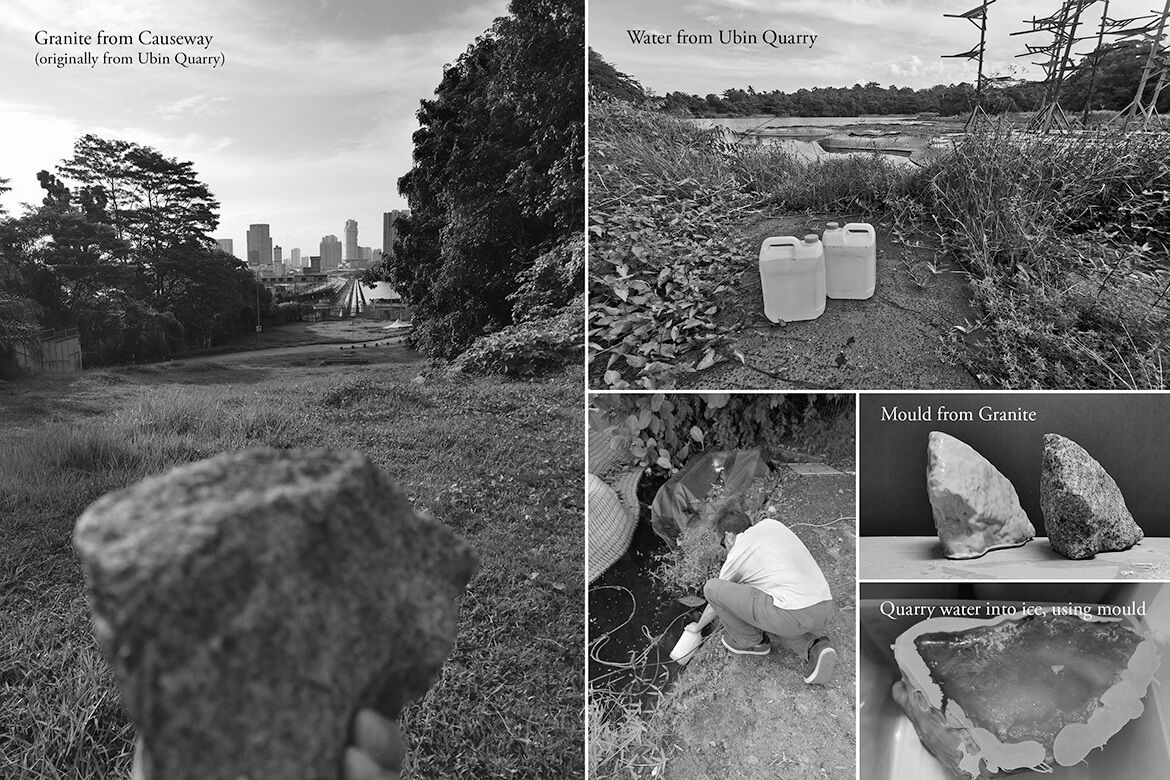
Everyday, 370,000 commuters travel between Singapore and Malaysia using the Johor–Singapore causeway. It was initially the only structural link between the two states, built during British Colonial rule. Officially completed on June 11, 1924, the Causeway’s five year construction period involved more than 2,000 workers and consumed about two million cubic metres of granite that were blasted form Pulau Ubin (an offshore island of Singapore) quarries. The deep quarries are now filled up by rain water.
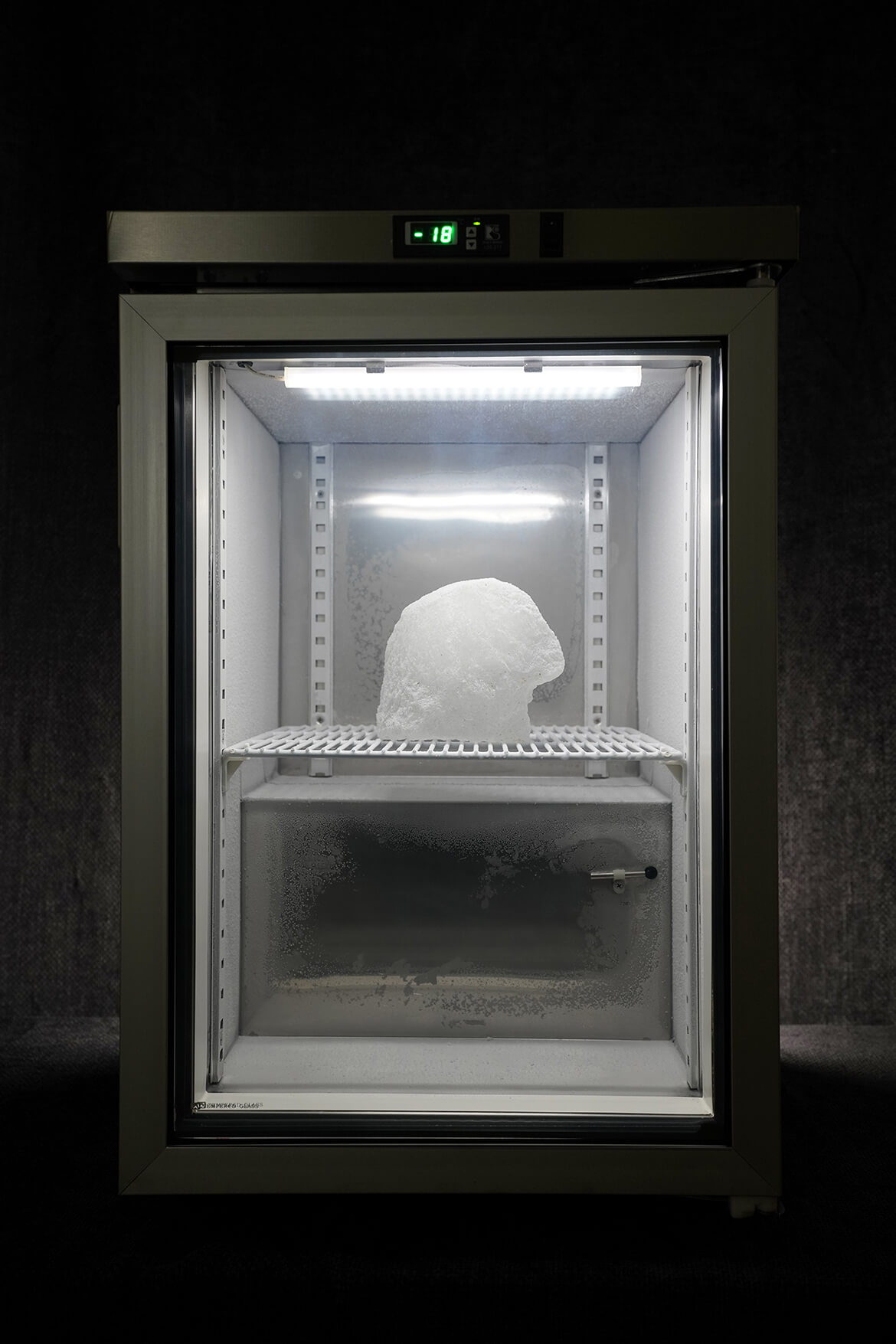
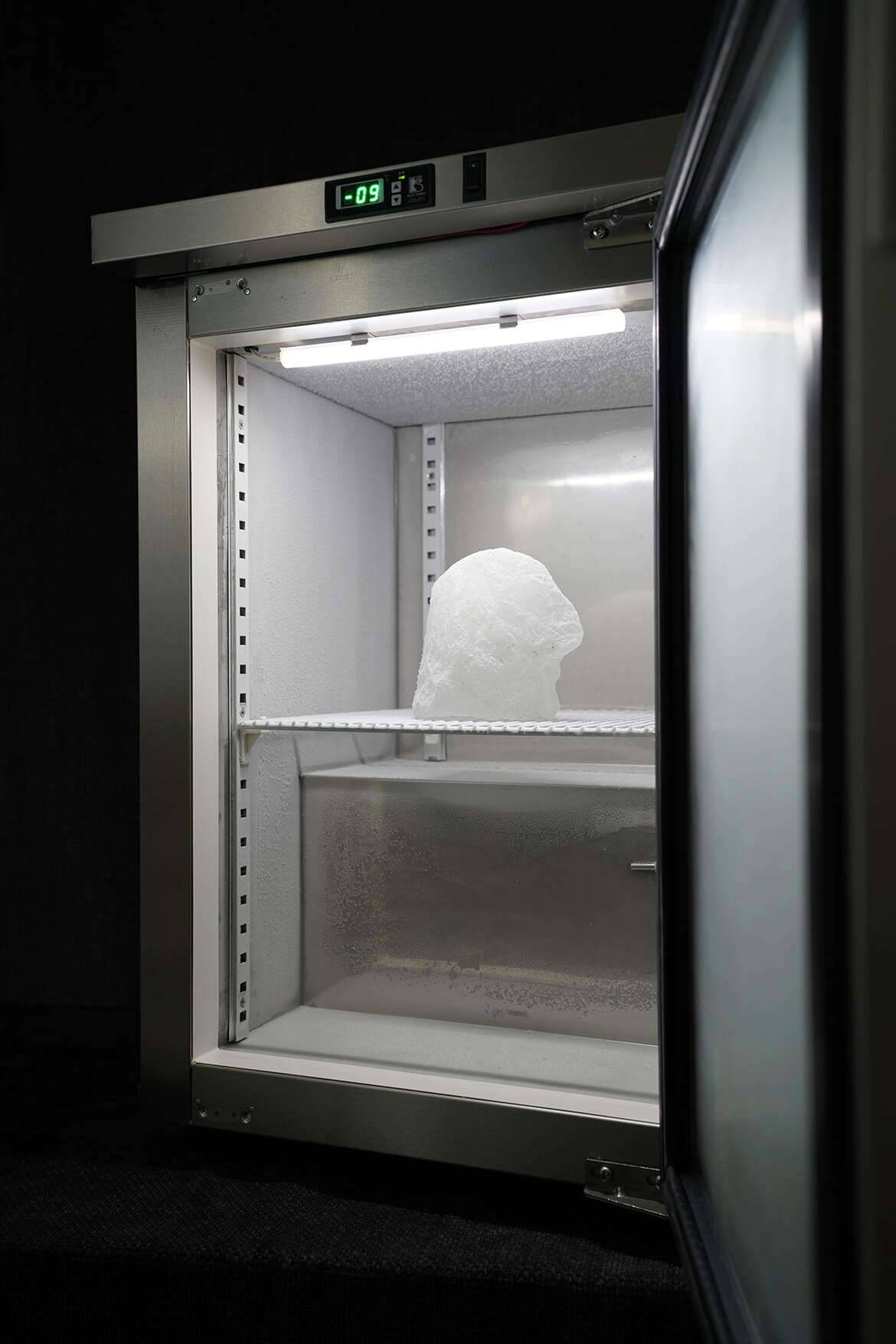
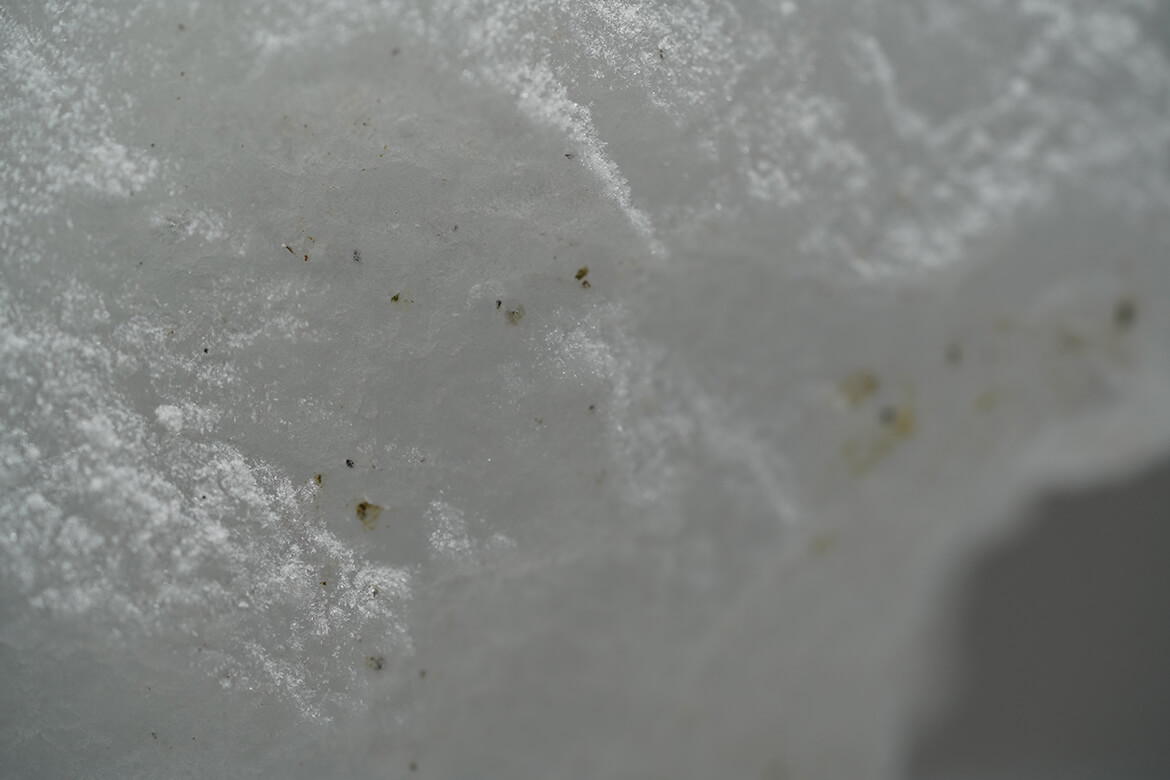
A piece of granite rock taken from the causeway, is used as a master for a mould. Collected rain water from Pulau Ubin quarry was turned into ice using the mould. To keep the ice in its form, effort would be required.
‘Air Doa Selamat’ is a Malay term that refers to the occasion where Johor royalties poured ceremonial waters into the Johor Straits, during the laying of the Causeway’s foundation stone ceremony.
The work was executed during the Covid-19 pandemic – when the normally congested causeway was eerily empty due to border closure.
2020
Media: Rain water from Pulau Ubin Quarry, display freezer
Dimension: 0.5 x 0.5 x 0.77M (freezer); 20 x 10 x 15 CM (ice)

Process
Email: antchin69@hotmail.com | IG: anthonychin.art